

What the study found
Anxiety symptoms were associated with greater stress-induced alcohol-seeking in women, but not in men. Across men and women, blunted state stimulation in response to alcohol was associated with greater stress-induced alcohol-seeking.
Why the authors say this matters
The authors conclude that identifying mechanisms behind sex-specific links with stress-induced alcohol-seeking can inform tailored intervention approaches and may enhance treatment efficacy for both men and women. They also note that the findings are consistent with Schuckit's low level of response to alcohol theory, and they suggest state stimulation may help explain sex differences in anxiety pathways to alcohol-seeking.
What the researchers tested
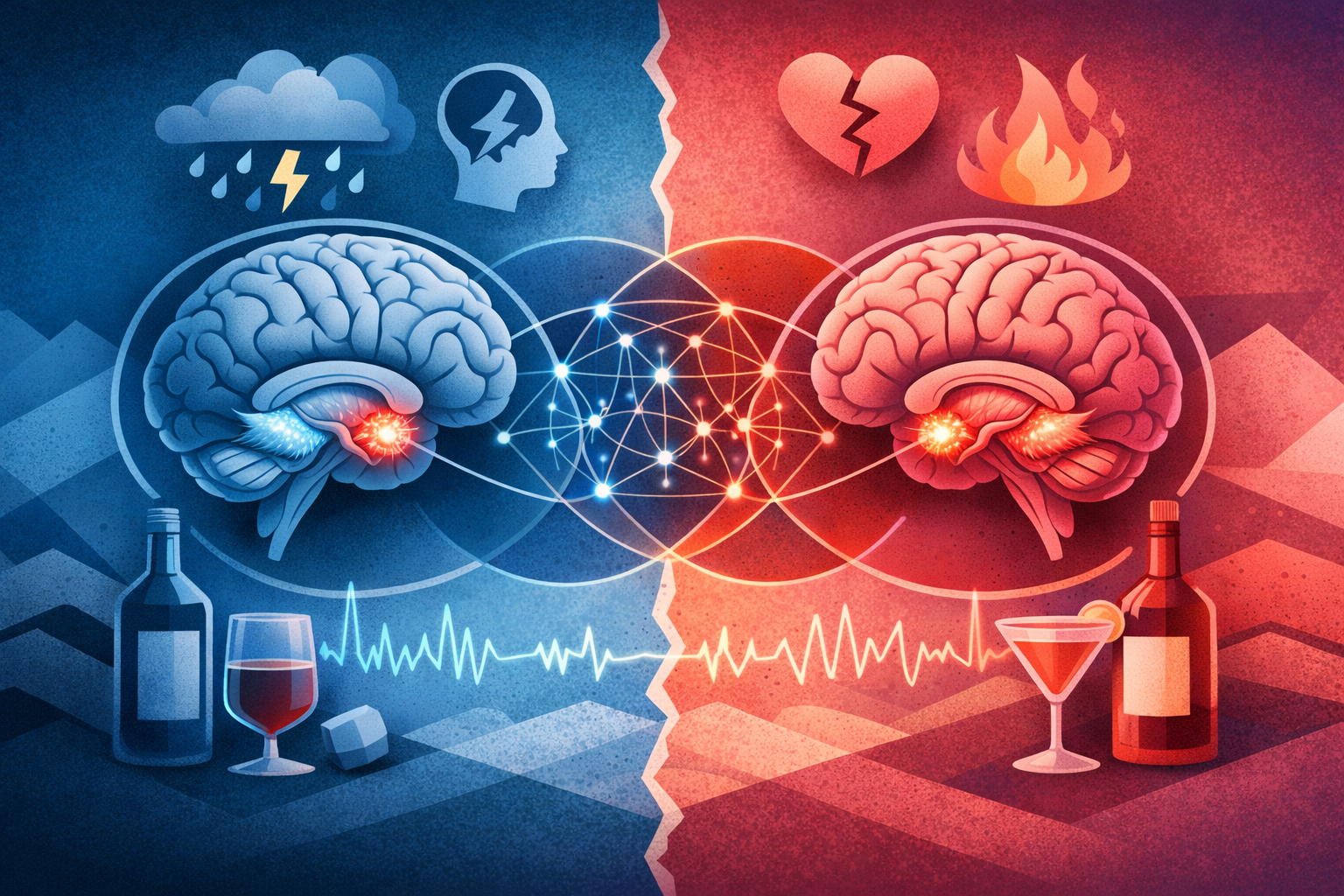
This was a secondary analysis of a previously published trial involving 84 adults aged 21 to 55 who reported moderate-to-heavy alcohol use. Participants completed two counterbalanced intravenous alcohol administration sessions, and 54 also completed optional neuroimaging focused on resting-state functional connectivity of the amygdala and hippocampus, brain regions linked to anxiety and depression.
What worked and what didn't
Generalized anxiety symptoms were significantly associated with greater stress-induced alcohol-seeking in women but not men. Depression symptoms showed a similar pattern, but the results did not reach statistical significance, and subjective alcohol responses did not mediate the relationship between depression symptoms and stress-induced alcohol-seeking. In men, anxiety symptoms were linked with heightened state stimulation effects, which appeared to buffer against stress-induced alcohol-seeking; resting-state connectivity findings identified several possible sex-dependent neural mechanisms that the authors say warrant further investigation.
What to keep in mind
The study was not originally designed as a direct test of competing subjective response and low-level response to alcohol theories. Only 54 participants completed the optional neuroimaging, and the abstract does not describe additional limitations beyond the exploratory nature of some findings.
Key points
- Generalized anxiety symptoms were linked to greater stress-induced alcohol-seeking in women, not men.
- Depression symptoms showed a similar pattern, but the result was not statistically significant.
- Blunted alcohol-related stimulation was associated with greater stress-induced alcohol-seeking across men and women.
- In men, anxiety symptoms were linked with heightened stimulation effects that appeared to buffer against stress-induced alcohol-seeking.
- Subjective alcohol responses did not mediate the depression symptom–stress-induced alcohol-seeking relationship.
- Resting-state connectivity findings suggested possible sex-dependent neural mechanisms.
Disclosure
- Research title:
- Stress-induced alcohol-seeking differed by sex and symptom type
- Publication date:
- 2026-02-23
- OpenAlex record:
- View
Get the weekly research newsletter
Stay current with peer-reviewed research without reading academic papers — one filtered digest, every Friday.