

AI Summary of Scholarly Research
This page presents an AI-generated summary of a published research paper. The original authors did not write or review this article. See full disclosure ↓
Publication Signals show what we were able to verify about where this research was published.STANDARDAvailable publication signals for this source were verified. Publication Signals reflect the source’s verifiable credentials, not the quality of the research.
Fewer signals were independently confirmable for this source. That reflects the limits of what’s on record — not a judgment about the research.
- ✔ No retraction or integrity flags
Key findings from this study
- The study found that recycled aggregate blends exhibited greater stiffness than virgin blends but demonstrated better long-term stability under freeze-thaw cycles despite higher initial permanent deformation.
- The researchers demonstrate that virgin aggregates failed under permanent deformation testing after freeze-thaw exposure, whereas recycled materials stabilized after initial deformation.
- The authors report that both aggregate types experienced resilient modulus reduction following freeze-thaw cycling, with gradation balance and fines content substantially influencing performance outcomes.
Overview
This study evaluated the structural performance of virgin quarry aggregates and recycled roadway materials under freeze-thaw cycling for unpaved road applications. Unpaved roads constitute approximately 74% of the roadway network in agricultural regions like Iowa but deteriorate rapidly due to traffic, environmental exposure, and freeze-thaw cycles. Freeze-thaw cycling induces expansion during freezing and void formation during thawing, compromising structural integrity and load-bearing capacity. The research compared six aggregate blends—three virgin and three recycled—across index properties, resilient modulus, and permanent deformation metrics.
Methods and approach
Researchers tested three virgin aggregate blends and three recycled aggregate blends. Testing protocols measured index properties, resilient modulus (MR), and permanent deformation (PD) for each blend. Materials underwent two freeze-thaw cycles with subsequent evaluation of MR and PD responses. Additional testing examined material behavior after five freeze-thaw cycles. Gradation characteristics, including sand and fines content, received particular analytical attention.
Results
Recycled aggregate blends demonstrated greater density and higher stiffness than virgin blends but exhibited inferior permanent deformation resistance. Both recycled and virgin blends experienced resilient modulus reduction following two freeze-thaw cycles. Virgin aggregates failed under permanent deformation testing after two and five freeze-thaw cycles, whereas recycled blends stabilized following initial deformation. Gradation balance and fines content significantly influenced long-term roadway performance outcomes.
Implications
The findings challenge the conventional assumption that virgin quarry aggregate provides superior performance in freeze-thaw environments. Premature failure observed in virgin aggregate blends under harsh winter conditions suggests substitution with recycled materials may extend pavement life and reduce maintenance expenditures. This conclusion applies particularly to regions experiencing repeated seasonal freeze-thaw cycling, where structural degradation accelerates maintenance requirements and operational costs.
Gradation characteristics emerge as a critical design parameter independent of material source. The stabilization behavior exhibited by recycled blends after initial deformation indicates adaptation mechanisms absent in virgin materials. Understanding these material-specific responses informs evidence-based selection criteria for unpaved road construction and rehabilitation in climatically challenging regions.
The differential performance between material types and under various freeze-thaw exposure levels establishes a technical foundation for material specification guidelines. Cost-effectiveness considerations intersect with performance outcomes, potentially reshaping procurement decisions for transportation agencies managing extensive unpaved road networks in agricultural areas.
Scope and limitations
This summary is based on the study abstract and available metadata. It does not include a full analysis of the complete paper, supplementary materials, or underlying datasets unless explicitly stated. Findings should be interpreted in the context of the original publication.
Disclosure
- Research title: Performance Evaluation of Virgin and Recycled Aggregate Blends for Unpaved Roads under Freeze-Thaw Cycles
- Authors: Umar Farooq, Celso Santos, Bora Cetin, Jeramy C. Ashlock, Mahsa Belalzadeh
- Institutions: Iowa State University, Michigan State University, Virginia Department of Transportation, West Virginia Department of Transportation
- Publication date: 2026-03-05
- DOI: https://doi.org/10.1061/9780784486757.049
- OpenAlex record: View
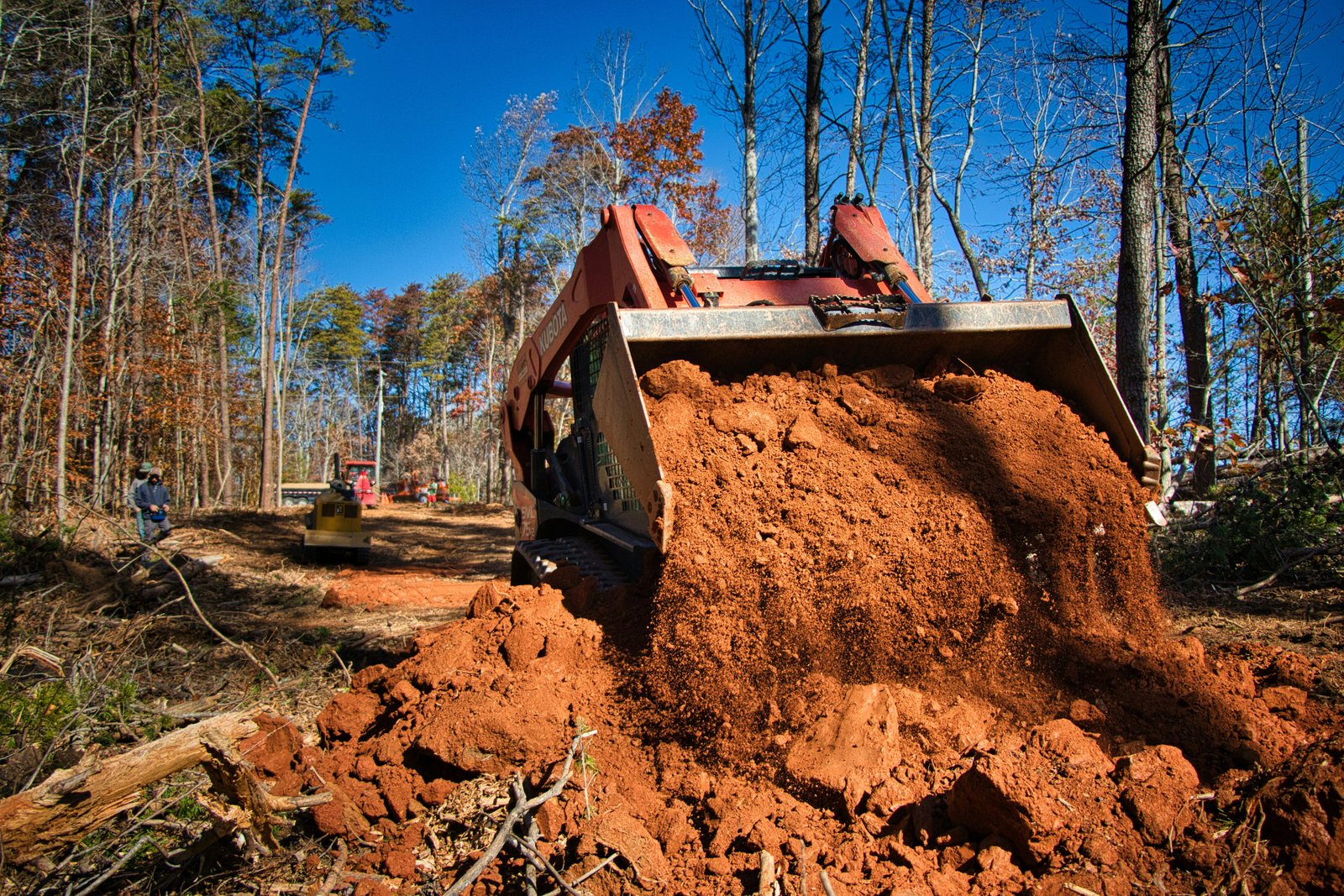
- Image credit: Photo by Chandler Cruttenden on Unsplash (Source • License)
- Disclosure: This post was generated by Claude (Anthropic). The original authors did not write or review this post.
Get the weekly research newsletter
Stay current with peer-reviewed research without reading academic papers — one filtered digest, every Friday.