

What the study found
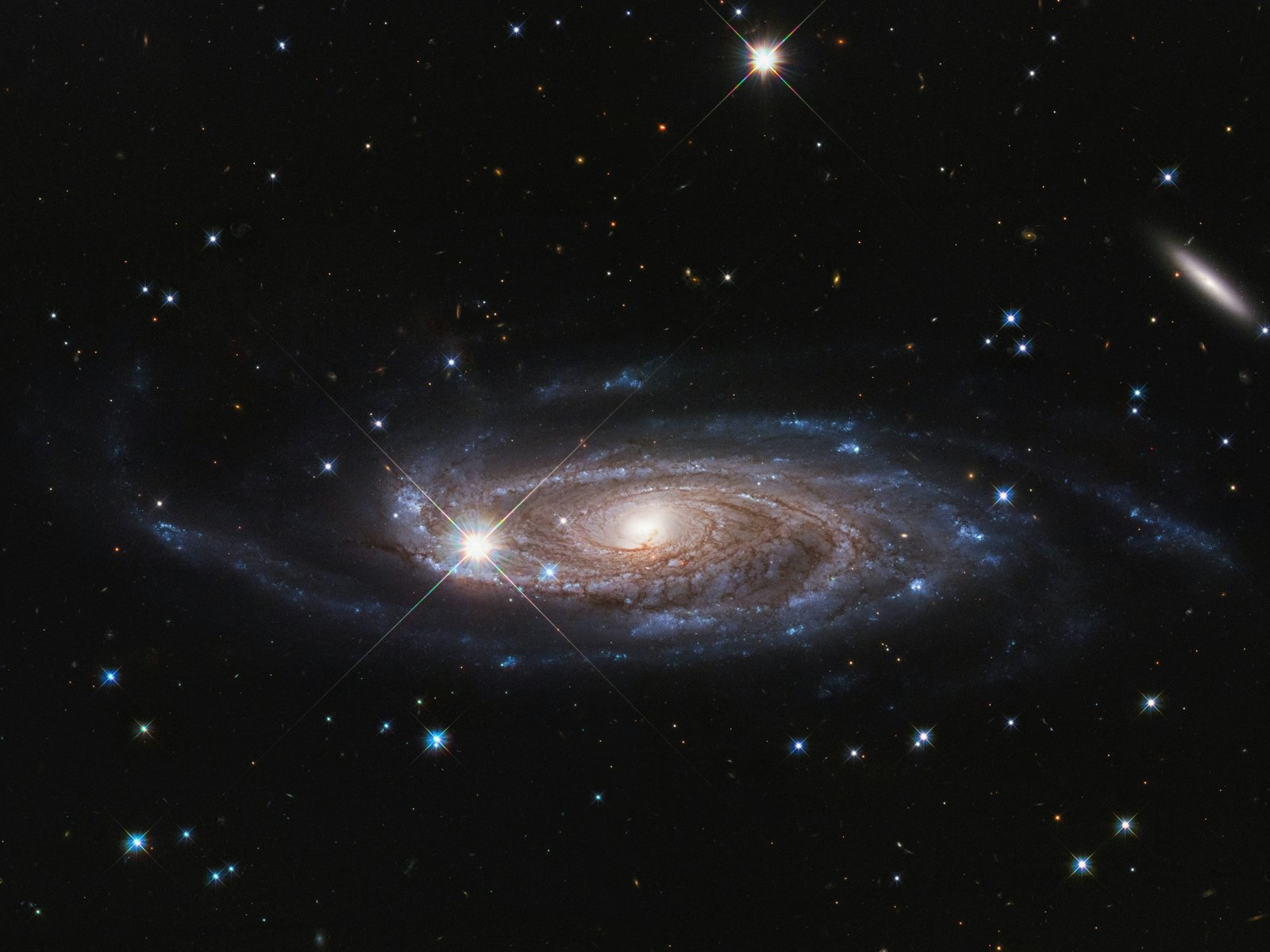
Some optically red spiral galaxies divide into two groups in near-ultraviolet (NUV) minus r color: NUV-r red spirals and NUV-r blue spirals. The study found that the main differences between them are concentrated in the outer disks, and that the NUV-band contrast is much larger than the contrast in optical light.
Why the authors say this matters
The authors say this helps clarify the complicated formation processes of disk galaxies. The findings indicate that NUV-r blue spirals may have gained fresh gas for star formation, either through interactions or mergers with gas-rich galaxies or by accreting surrounding neutral hydrogen (H I) gas.
What the researchers tested
The researchers compared NUV-r blue and red spiral galaxies drawn from a parent sample of optically red spirals with stellar mass greater than 10^10.5 solar masses at redshift 0.02 to 0.07. They used optical data from the Sloan Digital Sky Survey and ultraviolet data from the Galaxy Evolution Explorer, and examined images, surface brightness profiles, star formation main-sequence positions, NUV-r color profiles, and disk mass-size relations.
What worked and what didn't
The image and surface brightness analyses showed that the strongest differences lie in the outer disks, around 1 to 3 effective radii. The star formation main-sequence diagram and NUV-r color profiles suggest that NUV-r red spirals have been fully quenched, while NUV-r blue spirals have quenched bulges and inner disks but star-forming outer disks. The disk mass-size relations indicate that, at a given disk mass, NUV-r blue spirals have optical disks about 1.20 times larger than NUV-r red spirals.
What to keep in mind
The abstract does not describe detailed limitations beyond the sample selection. The study focuses on optically red spirals in a specific mass and redshift range, so the results are limited to that sample.
Key points
- The study compared NUV-r blue and NUV-r red spiral galaxies within a sample of optically red spirals.
- The biggest differences between the two groups were found in the outer disks, especially in near-ultraviolet light.
- NUV-r red spirals were described as fully quenched, while NUV-r blue spirals had quenched bulges and inner disks but star-forming outer disks.
- At a given disk mass, NUV-r blue spirals had optical disks about 1.20 times larger than NUV-r red spirals.
- The authors suggest fresh gas acquisition, through interactions or H I accretion, as a possible explanation for NUV-r blue spirals.
Disclosure
- Research title:
- NUV-blue spirals show star-forming outer disks
- Publication date:
- 2026-04-06
- OpenAlex record:
- View
Get the weekly research newsletter
Stay current with peer-reviewed research without reading academic papers — one filtered digest, every Friday.