

What the study found
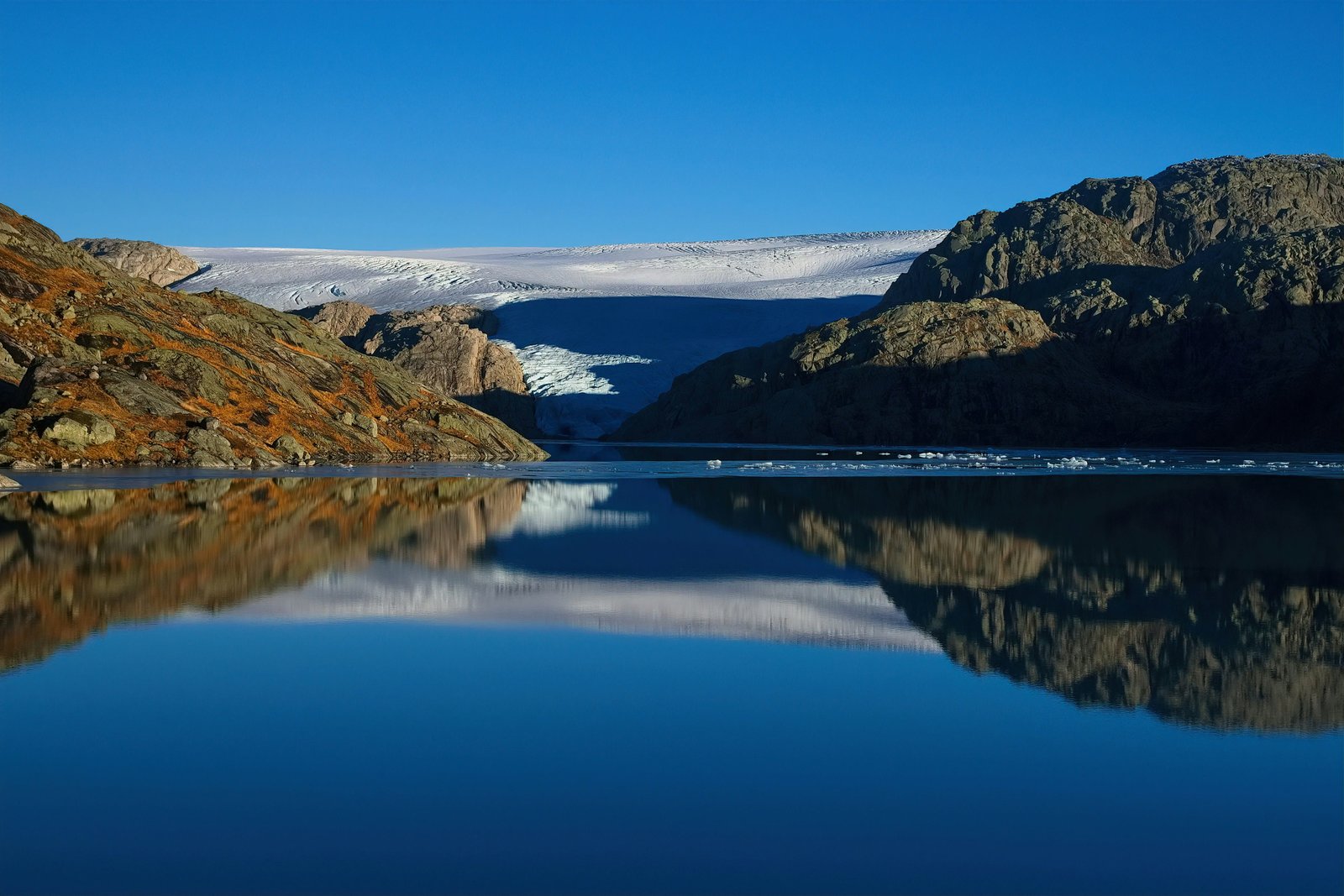
Glacial meltwater and coccolithophore blooms in Norwegian fjords can produce nearly the same apparent optical properties, including remote sensing reflectance and perceived color. The study found that standard satellite-based approaches could not separate the two particle regimes without prior knowledge.
Why the authors say this matters
The authors conclude that standard remote sensing algorithms cannot discriminate between glacial and biogenic particle regimes in fjords without a priori knowledge. They also suggest that autonomous observations may help quantify primary production in high-latitude coastal systems.
What the researchers tested
The researchers measured inherent and apparent optical properties in two contrasting fjords, Gaupnefjorden and Hardangerfjorden. They compared absorption, remote sensing reflectance, RGB chromaticity coordinates, scattering measurements, and volume scattering functions for fjord waters influenced by glacial meltwater or by a bloom of the coccolithophore Gephyrocapsa huxleyi, a microscopic algae-like organism that makes calcite platelets.
What worked and what didn't
The two fjords had almost indistinguishable remote sensing reflectance values and RGB chromaticity coordinates, and both showed absorption minima near 532 nm, matching the green color seen in satellite imagery. The inherent optical properties and scattering measurements did distinguish the two water types: Hardangerfjorden showed pronounced forward scattering, while Gaupnefjorden had broader angular scattering patterns. Both fjords had high backscattering ratios of 0.02–0.04, which are typical of optically complex coastal waters.
What to keep in mind
The abstract does not describe experimental limitations beyond the inability of standard remote sensing algorithms to separate the two regimes without prior knowledge. The findings are based on two fjords, so the scope stated in the summary is limited to those systems.
Key points
- Glacial meltwater and coccolithophore blooms produced nearly indistinguishable remote sensing reflectance and color.
- Both fjords showed absorption minima near 532 nm, consistent with a green appearance.
- Inherent optical properties and scattering measurements could distinguish the two water types.
- Hardangerfjorden showed pronounced forward scattering, while Gaupnefjorden had broader angular scattering patterns.
- Standard satellite algorithms could not separate mineral from biogenic particle regimes without prior knowledge.
Disclosure
- Research title:
- Glacial meltwater and coccolithophore blooms look optically similar in fjords
- Publication date:
- 2026-04-05
- OpenAlex record:
- View
Get the weekly research newsletter
Stay current with peer-reviewed research without reading academic papers — one filtered digest, every Friday.