

What the study found
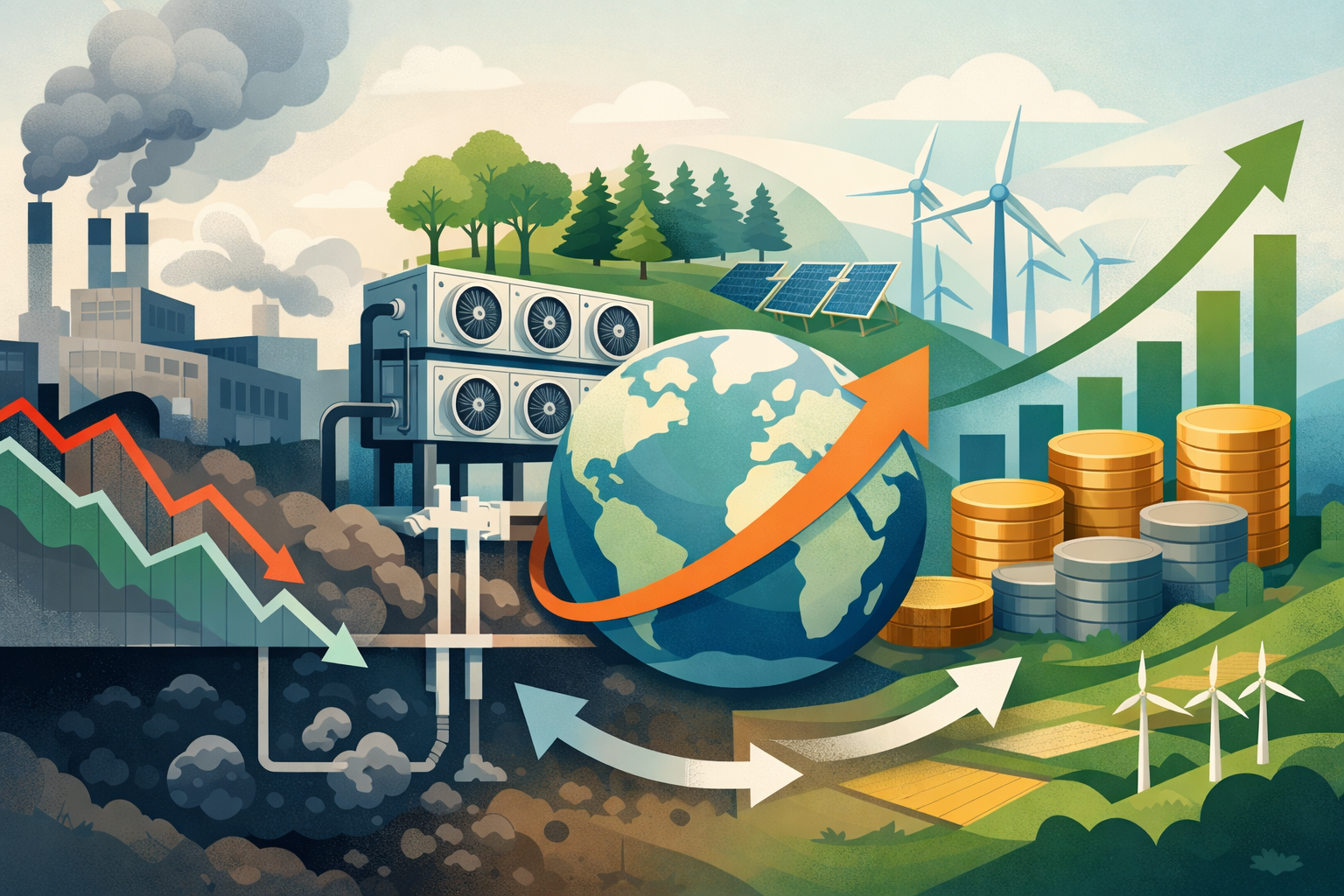
A calibrated mix of fossil fuel reduction and carbon dioxide removal (CDR, the removal of carbon dioxide from the atmosphere) was the most balanced pathway in this study. The authors report that the limCDR scenario met the 1.5°C target and had the highest gross world product and GDP per capita by 2100.
Why the authors say this matters
The study suggests that meeting climate goals while maintaining long-term economic resilience requires both early mitigation and targeted removals. The authors conclude that neither fossil fuel phaseout nor CDR alone is sufficient.
What the researchers tested
The researchers used the En-ROADS modeling tool to evaluate five global scenarios built from different levels of fossil fuel reduction and CDR deployment. The scenarios were based on current COP28-aligned pledges, with some adding fossil fuel taxes and carbon pricing, and others adding varying levels of technological CDR deployment.
What worked and what didn't
The Ref scenario did not meet the 1.5°C goal and produced the lowest long-term GDP per capita. Ref++ met the temperature target but required sharper near-term fiscal adjustments, while modCDR improved macroeconomic performance relative to Ref but did not keep warming below 1.7°C. allCDR reduced early fiscal pressure by relying heavily on large-scale removals, but it increased long-term dependence on CDR.
What to keep in mind
Population growth was held constant across all scenarios. The abstract does not describe other limitations beyond the modeled scenario assumptions and the fact that the analysis is based on En-ROADS projections.
Key points
- The limCDR scenario met the 1.5°C target and had the highest gross world product and GDP per capita by 2100.
- The Ref scenario failed to meet the 1.5°C goal and had the lowest long-term GDP per capita.
- Ref++ met the temperature target but required sharper near-term fiscal adjustments.
- modCDR improved macroeconomic performance relative to Ref but did not limit warming below 1.7°C.
- allCDR lowered early fiscal pressure but increased long-term dependence on CDR.
Disclosure
- Research title:
- Mixed fossil mitigation and CDR best matched climate and economic goals
- Publication date:
- 2026-02-24
- OpenAlex record:
- View
Get the weekly research newsletter
Stay current with peer-reviewed research without reading academic papers — one filtered digest, every Friday.