

AI Summary of Scholarly Research
This page presents an AI-generated summary of a published research paper. The original authors did not write or review this article. See full disclosure ↓
Publication Signals show what we were able to verify about where this research was published.MODERATECore publication signals for this source were verified. Publication Signals reflect the source’s verifiable credentials, not the quality of the research.
- ✔ Published in indexed journal
- ✔ No retraction or integrity flags
Key findings from this study
This research indicates that:
- On-device large language models show promise for conservation field work but require infrastructure incompatible with current resource-limited settings.
- Computational demands of existing on-device models exceed typical conservation organizations' technical capacity and equipment availability.
- Successful deployment depends on developing lightweight architectures specifically designed for conservation contexts rather than adapting general-purpose models.
Overview
This research investigates the viability of deploying large language model assistants on field devices for conservation work. The study examines whether on-device AI could enhance data collection experiences for field staff operating in resource-constrained environments across the Pacific Northwest and Namibia. The analysis reveals a fundamental tension between the computational demands of current on-device models and the infrastructure realities of conservation organizations.
Methods and approach
The researchers conducted semi-structured interviews, surveys, and participant observation with partner conservancies in two geographic regions. They employed speculative design methods grounded in technology acceptance theory to evaluate on-device AI integration. A transcription-language model pipeline was developed and integrated into EarthRanger, an open-source conservation platform, to simulate realistic deployment scenarios.
Results
On-device large language models present potential benefits for field data collection but face substantial practical constraints in conservation settings. The infrastructure requirements of current on-device models—including computational power, storage capacity, and sustained connectivity—are misaligned with typical conservation organizations' resource availability. The study identified specific use cases where on-device AI could support field staff, yet the deployment pathway requires technological and organizational adaptations beyond current capabilities in resource-limited contexts.
Implications
Conservation organizations considering on-device AI adoption must address foundational infrastructure gaps before implementation becomes feasible. The mismatch between model requirements and field-site realities suggests that technology-first approaches may be ineffective without concurrent investments in computational resources and technical support systems. Future development of on-device solutions for conservation should prioritize lightweight architectures explicitly designed for resource-constrained settings rather than deploying existing models.
Scope and limitations
This summary is based on the study abstract and available metadata. It does not include a full analysis of the complete paper, supplementary materials, or underlying datasets unless explicitly stated. Findings should be interpreted in the context of the original publication.
Disclosure
- Research title: The Promise and Peril of On-Device AI for Conservation Work
- Authors: Cynthia Dong, Emmanuel Azuh Mensah, Vaishnavi Ranganathan, Kurtis Heimerl
- Institutions: Microsoft (United States), University of Washington
- Publication date: 2026-04-13
- DOI: https://doi.org/10.1145/3772318.3791359
- OpenAlex record: View
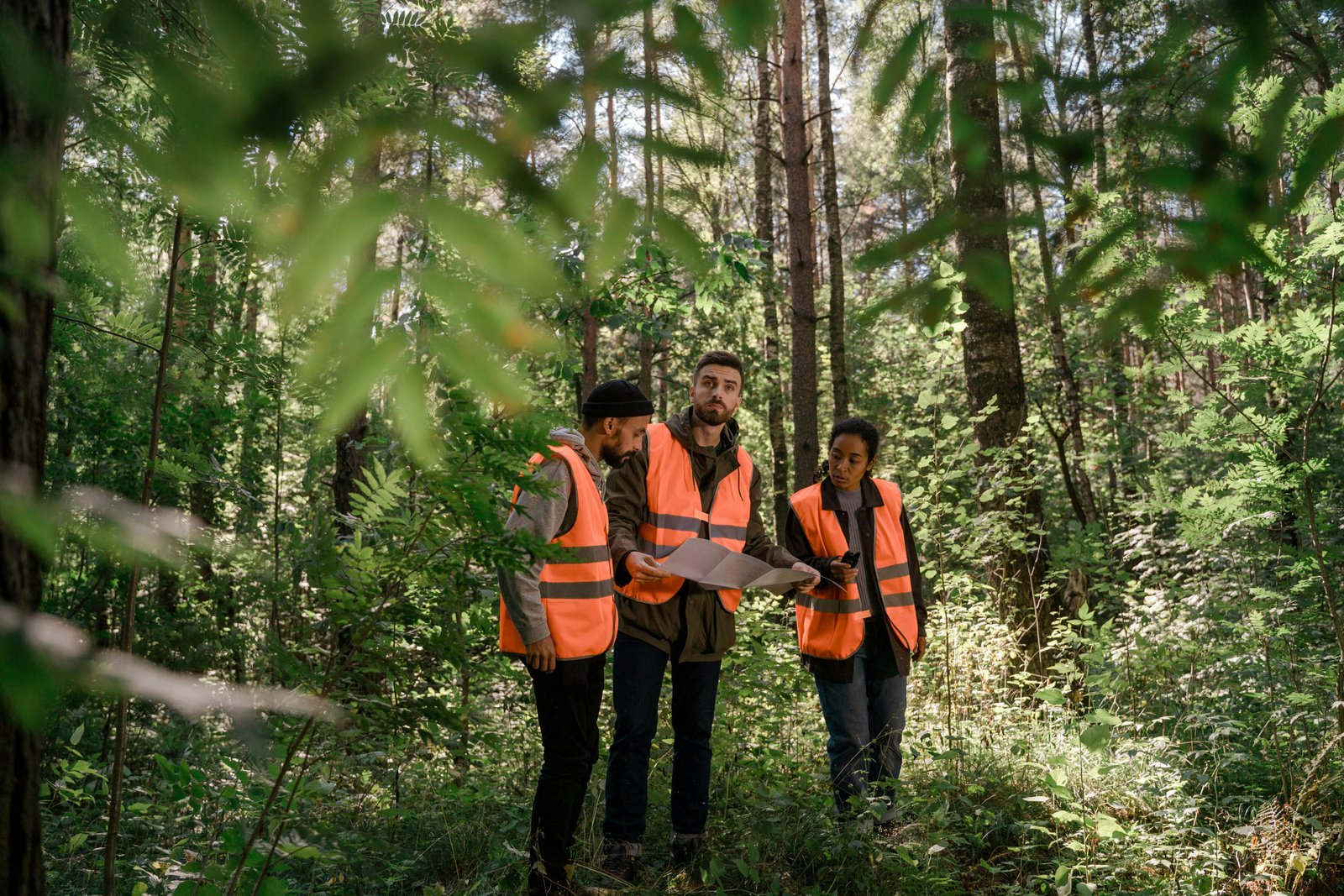
- Image credit: Photo by Ron Lach on Pexels (Source • License)
- Disclosure: This post was generated by Claude (Anthropic). The original authors did not write or review this post.
Get the weekly research newsletter
Stay current with peer-reviewed research without reading academic papers — one filtered digest, every Friday.